Bengal Kitten .Net

A Co-Op of Quality

Bengal Breeders  


  Home  |   Retirees  |    Bengal Breeders  |   Bengal Kittens    |    Links    |   EMAIL US!


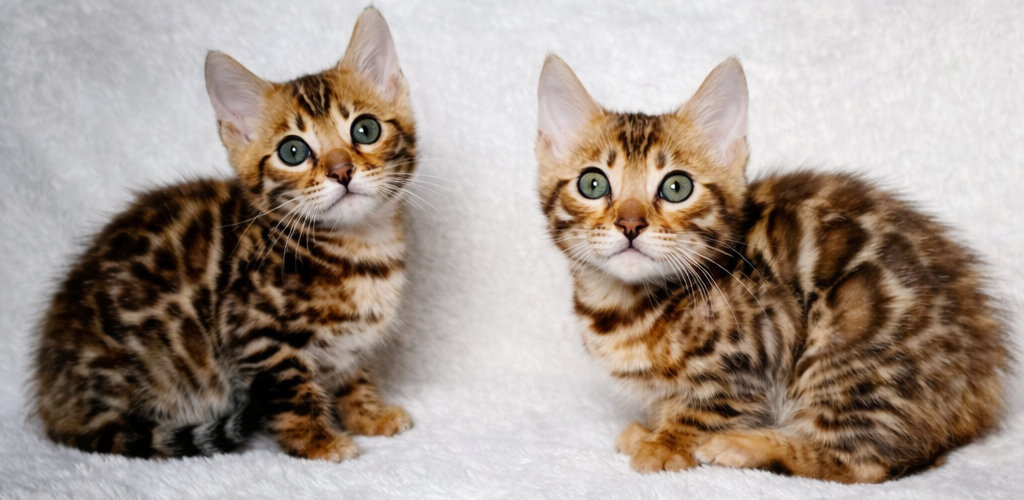
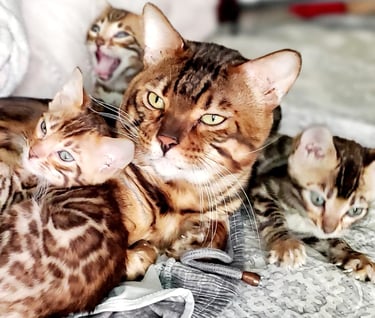
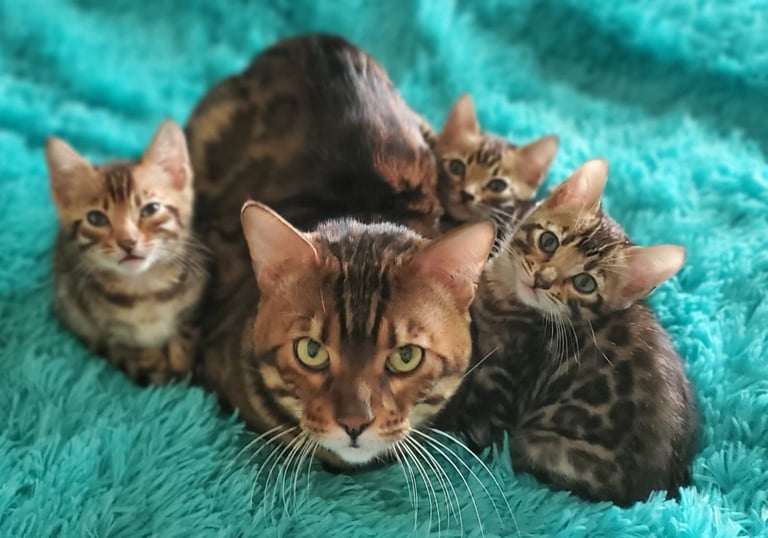
Just One of Our Beautiful Bengal kittens


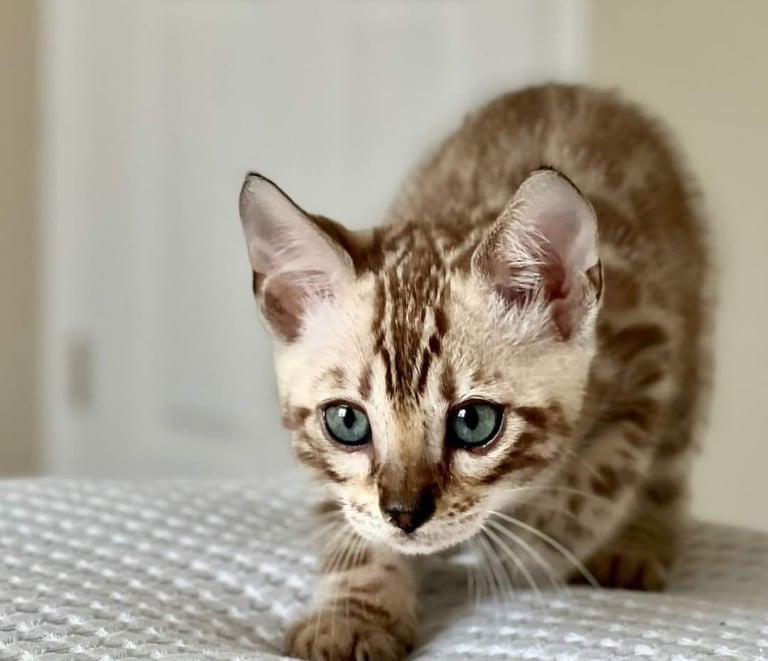
Snow Spotted Bengal KttenA lot of you out there are probably thinking what are Back Yard Breeders (BYB).  They are people who bring two breeding animals together regardless of their quality to earn some quick money.  Some BYB are from upper class homes and may really look after their cats, however getting your kitten from a BYB is a gamble I would not like anyone to take.  It may look a bargain a Bengal kitten for $2-300, but in the long run you may end up paying a lot more in vets bills than you would from a reputable breeder.  These irresponsible breeders are contributing to the millions of young kittens/cats found in rescue centers across the world.  Please if you cannot afford to go to a reputable breeder for your kitten why not take a look at your local animal rescue center.
 

What are BYB?

  • They will breed cats that are not close to the Breed Standard

  • They do not know what the breed standard is for that breed

  • They breed cats which may have bad temperaments

  • They breed cats which may have serious faults either cosmetic or genetic

  • They do not screen parents for genetic faults (HCM, eyes)

  • They do not know what genetic faults the breed may have

  • They will breed the adult cat constantly  not allowing her to rest or get back into full health

  • They will breed kittens even if they have no homes, if no homes are found they will then be put out onto the street or sold for VERY little money to pet stores.

  • Once the cat/kitten is sold they have no further contact with you and are never in when you call

  • They sell to pet shops and will often raffle a kitten off as a top prize

  • They never vaccinate the kittens

  • Usually kittens are sold at 6/8 weeks

  • Kittens are not weaned before they leave

  • Kittens are not litter trained/wormed etc.

  • Kittens are not sold with a contract

  • Kittens will not be registered with the appropriate bodies, ie. TICA etc.

  • Cats maybe  allowed to roam outside therefore picking up any diseases that are present

  • Cats are not regularly vaccinated and do not have health checks>

  • A BYB will not allow you to go and visit the kittens unless they think they have a sale

  • Sometimes both parents may not be available to view

The damage a BYB  can create is astronomical as most BYB do not require a contract signing saying that the kitten will be spayed/neutered, this therefore leads to a chain where everyone decides they will have a litter of kittens before they get her/him spayed/neutered.  It is a fact that in 6 years one un-spayed cat will be responsible for around 76,000 descendants, frightening isn't it, especially as 75% of these will end up in rescue centers.


So what should I look for ?Brown Spotted Bengal Kitten

A kitten that is 12 weeks

No physical sign of illness

Lift up the tail and check for signs of Diarrhea

Do not choose a kitten that looks weak and ill just because you feel sorry for it

Check for pot bellies it may be that the kitten needs worming

Check in the ears to much wax may be a sign of ear mites

Kittens that are friendly and don't mind handling.

Clear eyes and no runny discharge.


What should I receive when purchasing my kitten?

Pedigree this should be at least 3 generations with Registration Numbers and must be signed by by the breeder.

TICA Registration, unless otherwise agreed that this will not be provided, sometimes breeders may hang onto this until you provide proof of neutering or spaying.

Contract, most reputable breeders will provide you with a contract, please read this fully before signing.

Feed Guide, Please check with the breeder what food is being fed as a sudden change in diet can cause stomach upsets, its also a good idea to see which brand of litter they are using as a change can often result in accidents.

Insurance, some breeders will provide you information about pet insurance, you are given the option to take out an annual policy, I would definitely recommend this.


How to Perform Artificial Respiration or CPR on Your Bengal.
 

In any emergency situation, it is ALWAYS best to get your cat to professional help immediately, rather than to try and help it by yourself. However, if your cat has been injured and has stopped breathing or has no pulse and you cannot get to an emergency hospital, the following procedures may save your pet’s life.

Think about Human CPR…the steps are basically the same. Think ABC’S.

Airway: First step..Is your cat breathing? Gently tap your cat and call out the name and see if the cat moves. If they do not move or open their eyes CALL FOR HELP (help is always a good thing at a time like this)…lean down and LOOK, LISTEN, and FEEL for breathing.


LOOK: at the chest of the animal to determine if it is moving.
LISTEN: to see if you can hear them breathing.
FEEL: their breath on your cheek or the back of your hand.

Breathing: If you assess that your cat isn’t breathing, you need to do rescue breathing immediately.

Remove their collar (if there is one on them)

Lay the cat on a hard surface with its right side down and the body elevated slightly higher than the head. Keep the head and neck straight to maintain an open airway.

Open the mouth and clear secretions. Check for an observable foreign object. If an object is found remove it with a finger sweep being careful not to push the object further down the airway. If you cannot reach the object, perform the Heimlich maneuver.


A. Heimlich Maneuver

After attempting to ventilate and are not successful:


  • Turn the animal upside down, with its back against your chest.

  • With both arms, give 5 sharp thrusts (bear hugs to the abdomen.

  • Stop, check to see if the object is visible in the airway. If so…remove it and give 2 mouth to nose rescue breaths.

  • If the breaths do not go in, go back to step a.

  • DO NOY proceed with CPR, even if the animal goes into cardiac arrest. You MUST clear the airway first. Otherwise you are circulating UNOXYGENATED blood.

  • Pull their tongue slightly out of their mouth and close the mouth…GENTLY, do not press hard on the tongue…this will clear their airway. Observe the cat…see if the cat has started to breath on their own. (Think of it as the head tilt part of people CPR. The tongue is the most common obstruction in the airway problems.)
  • Perform Mouth-Snout respirations. If you observe NO breathing…place your mouth over the cat’s nose. Blow gently into the cats nostrils. Watch to see if the chest expands. You want to only put in enough air to make the chest expand. Remember…cat’s lungs are small. Excess air will escape through the cat’s lips. Think like Human Infant CPR…a little puff of air…just enough to make the chest rise.
  • Repeat Rescue breaths every two seconds until the cat begins breathing on it’s own or as long as there is a heat beat.
  • Circulation:

    Next step is to see if there is a heartbeat. You only want to do what is necessary. Do not attempt this on a cat that is breathing or if there is a heartbeat.


    Pulse Check: Does your cat have a pulse? There are pulse points located in various areas of your cat. For a cat, the best place to find the pulse is on the inside of the left front leg., just behind the shoulders. This is the Apical Pulse. The Femoral pulse is located on the inside of the rear legs toward the top of the leg.

    NO Pulse…begin CPR

  • a. Kneel behind the cat at the shoulder level. Place the fingertips and thumb on either side of the sternum, at about the fifth rib, just above and behind the elbows of the cat. (sandwiching the animals heart between your hand)

  • b. Compress the chest wall ½ to ¾ of an inch at a rate of about 80-100 times per minute.

    • For animals 11-60 lbs: 80-100 compressions per minute.

    • For animals 10lbs and under: 120 compression’s per minute.

  • c. Perform Artificial Respiration’s once every 3 compressions.

  • i. Compress, Compress, Compress…Breath…Compress, compress, compress…Breath.

  • d. Pause every two minutes for 5-10 seconds to check for pulse and spontaneous breathing.

  • e. Continue until the heat beats and cat breaths freely, or until no heartbeat is felt for 30 minutes.

  • During an emergency it is very important that you remain calm. Animals can sense your unease, but cannot understand what is happening and you cannot verbally tell them. Your body language is very important…be calm, deliberate in your actions, and have a calm, low voice. When you have determined that you have either corrected the life threatening problem, or are unable to stabilize the animal, you should transport it to an emergency facility.

    Notify the clinic that you are coming in with an animal in respiratory/cardiac arrest. Give them all the pertinent information…your name, your ETA, type of animal/size, steps you have taken (cpr/rescue breathing), if it is an foreign body-what the suspected object is, if a poison or medication has been ingested or mechanisms of injury…fall/hit by car ect. NEXT…MOST IMPORTANT…Write the phone number of the 24 hour animal emergency hospital nearest to you BY YOUR PHONE. You do not want to go on a hunt and search at this time.


    Medical care and advice given here is for your knowledge and information only. It is NOT a substitute alternative for veterinary appointment or an actual diagnosis of your pet. If you feel your pet has a health or behavior problem please consult your veterinarian immediately for specific advice tailored to your animal.


    In an Emergency seconds count. Take the time today to find your cat’s sternum, elbows, femoral artery BEFORE you need them. That way it wll be one les thing to worry about should you need CPR. Ask your vet about Cat CPR and to help you find your landmarks before you need them.


    Hopefully, you will never need to use this information

    Submitted by Alshar Cattery


    For further Breed Information,  Please contact us
    Site Co-Op Members:
    • To list on this site, members must subscribe to the TIBCS ethics guidelines.  They must also test and treat as necessary for Tri-Trichamonas Foetus and HCM .

    • Members must provide a reciprocal link to this site

    • Members must refer inquiries within the group

    • Listing Costs include monthly reports on Web Site performance

    • Monthly picture changes are also included

    • $50 per year.

    • Contact us below for more information.

    Contact Us!  Debbie@BengalKitten.Net

    Debbie Anderson - Site Owner 


    TIBCS - Bengal Parent Club.  We register our Bengal kittens with this organization.

    TIBBA - International Bengal Breeders Association TIBBA - International Bengal Breeders Association


     Bengal kittens, Bengal kitten, Bengal kittens, Bengal kitten, Bengal kittens, Bengal kitten, Bengal kittens, Bengal kittens

    © 2007-2008 www.NiteWindes.com


    Bengal Breeder Bengal Kitten Bengal Kittens Bengal Kitten Breeders Bengal Kittens For Sale Bengal Kitten Bengal Kittens Bengal Kittens